Loading ...

Course / Course Details

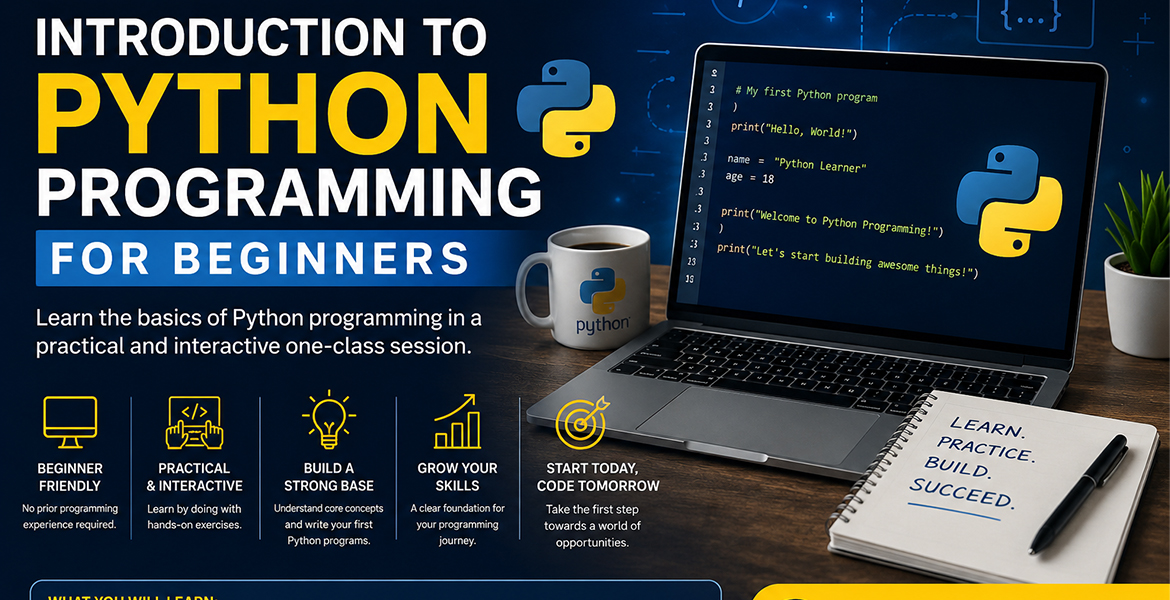
Introduction to Python Programming for Beginners

  • Charles Ahuose Misheal image

    By - Charles Ahuose Misheal

  • 7 students
  • N/A
  • (0)

Course Requirements

This course is designed for individuals who want to begin their journey into programming and software development using Python, one of the world's most popular and beginner-friendly programming languages. The course introduces learners to the fundamental concepts of programming through practical exercises and hands-on learning.

Requirements for the Course

No Prior Programming Experience Required
This course is specifically designed for beginners. Learners do not need to have previous experience in programming, coding, or software development. All concepts will be introduced from the basics and explained step by step.

A Computer or Laptop is Recommended
Learners are encouraged to have access to a computer or laptop to follow practical demonstrations and complete programming exercises. A computer will enable participants to install the required software, write Python programs, test their code, and participate effectively in hands-on activities.

Basic Computer Literacy
Participants should have basic knowledge of using a computer, including creating and managing files and folders, using a web browser, installing software, and typing on a keyboard. Advanced computer skills are not required.

Willingness to Learn and Participate in Practical Exercises
Programming is best learned through practice. Learners should be prepared to actively participate in practical exercises, follow demonstrations, write and test Python code, solve simple programming problems, and continuously practice the skills introduced during the course.

By the end of the course, learners will have a strong foundation in Python programming and a better understanding of how computer programs are developed. The course will provide a starting point for further learning in areas such as web development, data analysis, automation, artificial intelligence, cybersecurity, and software development.

Course Description

This beginner-friendly one-class course introduces learners to the fundamentals of Python programming and provides an excellent starting point for anyone interested in learning how to code. Python is one of the world's most popular and widely used programming languages, known for its simple and easy-to-understand syntax.

During this practical and interactive session, learners will be introduced to what Python is, how computer programming works, and how instructions are written to enable computers to perform specific tasks. Students will learn the basic concepts of writing code and will be guided step by step through creating and running their first simple Python programs.

The course is designed specifically for beginners, and no prior programming experience is required. Learners will have the opportunity to follow practical demonstrations, write and test simple Python code, and participate in interactive exercises. The session aims to build confidence and give participants a clear understanding of the basic principles of programming.

Course Requirements

  • No prior programming experience required: This course starts from the basics and is suitable for complete beginners.
  • A computer or laptop is recommended: Learners are encouraged to have access to a computer or laptop to follow demonstrations and participate in practical programming exercises.
  • Basic computer literacy: Participants should be comfortable performing basic tasks such as using a computer, opening applications, managing files, and using a keyboard.
  • Willingness to learn and participate: Learners should be ready to actively participate in practical exercises, write simple programs, test their code, and explore the basics of programming.

By the end of the session, learners will have written and run their first Python programs and gained a clear foundation for continuing their programming journey. The knowledge gained can serve as a starting point for further learning in areas such as software development, web development, automation, data analysis, artificial intelligence, and cybersecurity.

Course Outcomes

By the End of This Course, Learners Will Be Able To:

  • Explain what Python programming is: Learners will understand what Python is, why it is one of the most widely used programming languages, and how it is applied in areas such as software development, web development, automation, data analysis, artificial intelligence, and cybersecurity.
  • Understand basic programming concepts: Learners will gain an introduction to how computer programs work, including how programmers write instructions and how computers interpret and execute those instructions to perform specific tasks.
  • Write and run a simple Python program: Participants will learn how to create a Python file, write basic Python instructions, save their work, and run a simple program to see the results of their code.
  • Create and use variables: Learners will understand the purpose of variables in programming and learn how to create and use them to store and work with different types of information.
  • Work with simple data types: Participants will be introduced to common Python data types, such as text (strings), whole numbers (integers), decimal numbers (floats), and basic logical values (Boolean values), and understand how they can be used in simple programs.
  • Understand basic Python syntax: Learners will become familiar with the basic structure and rules used when writing Python code, including how to write instructions correctly and avoid common beginner mistakes.
  • Use simple input and output operations: Learners will be introduced to displaying information and receiving simple user input, helping them understand how programs can interact with users.
  • Apply knowledge through practical exercises: Participants will have an opportunity to practice what they have learned by completing simple hands-on programming exercises and creating basic Python programs.
  • Build confidence in programming: By writing and running their own code, learners will gain confidence in their ability to understand programming concepts and begin solving simple problems using Python.
  • Identify the next steps in their Python learning journey: Learners will understand the areas they can explore after completing the course, including advanced Python programming, web development, automation, data analysis, artificial intelligence, cybersecurity, and software development.

Course Curriculum

  • 0 chapters
  • 0 lectures
  • 0 quizzes
  • N/A total length
Toggle all chapters

Instructor

Charles Ahuose Misheal

Passionate Educator & IT Professional | 5+ Years of Experience.


I help learners build practical technology skills and confidence through clear, patient, and project-based teaching.


I’ve taught students of all levels in: Programming, Computer Science, AI, and Digital Technology.


My approach is simple: break complex ideas down, make them engaging, and apply them to real-world problems. 


Because every learner can master technology with the right guidance.

0 Rating
0 Reviews
7 Students
1 Courses

Course Full Rating

0

Course Rating
(0)
(0)
(0)
(0)
(0)

No Review found

Sign In or Sign Up as student to post a review

Student Feedback

Course you might like

Beginner
Cybersecurity
0 (0 Rating)
The "Introduction to Cybersecurity" course is designed to equip individuals with the fundamental knowledge and skills ne...
Beginner
JavaScript
0 (0 Rating)
A JavaScript Quiz is an assessment designed to test knowledge of JavaScript programming concepts. It may include various...

You must be enrolled to ask a question

Students also bought

More Courses by Author

Discover Additional Learning Opportunities