The course provides learners with a strong foundation in the principles of scale drawing and bearing, combining mathematical concepts with practical drawing techniques. Learners are introduced to methods of representing real-world distances, locations, directions, and measurements on paper using appropriate scales and drawing conventions. The training emphasizes accuracy, precision, neatness, correct measurement, and proper presentation.
A major component of the course focuses on scale drawing, where learners develop an understanding of scale ratios and how they are used to represent large or small objects, distances, areas, maps, plans, and layouts in a manageable format. Learners explore different types of scales and learn how to calculate actual distances from scaled drawings as well as determine scaled measurements from actual dimensions. They also learn how to enlarge or reduce drawings while maintaining correct proportions.
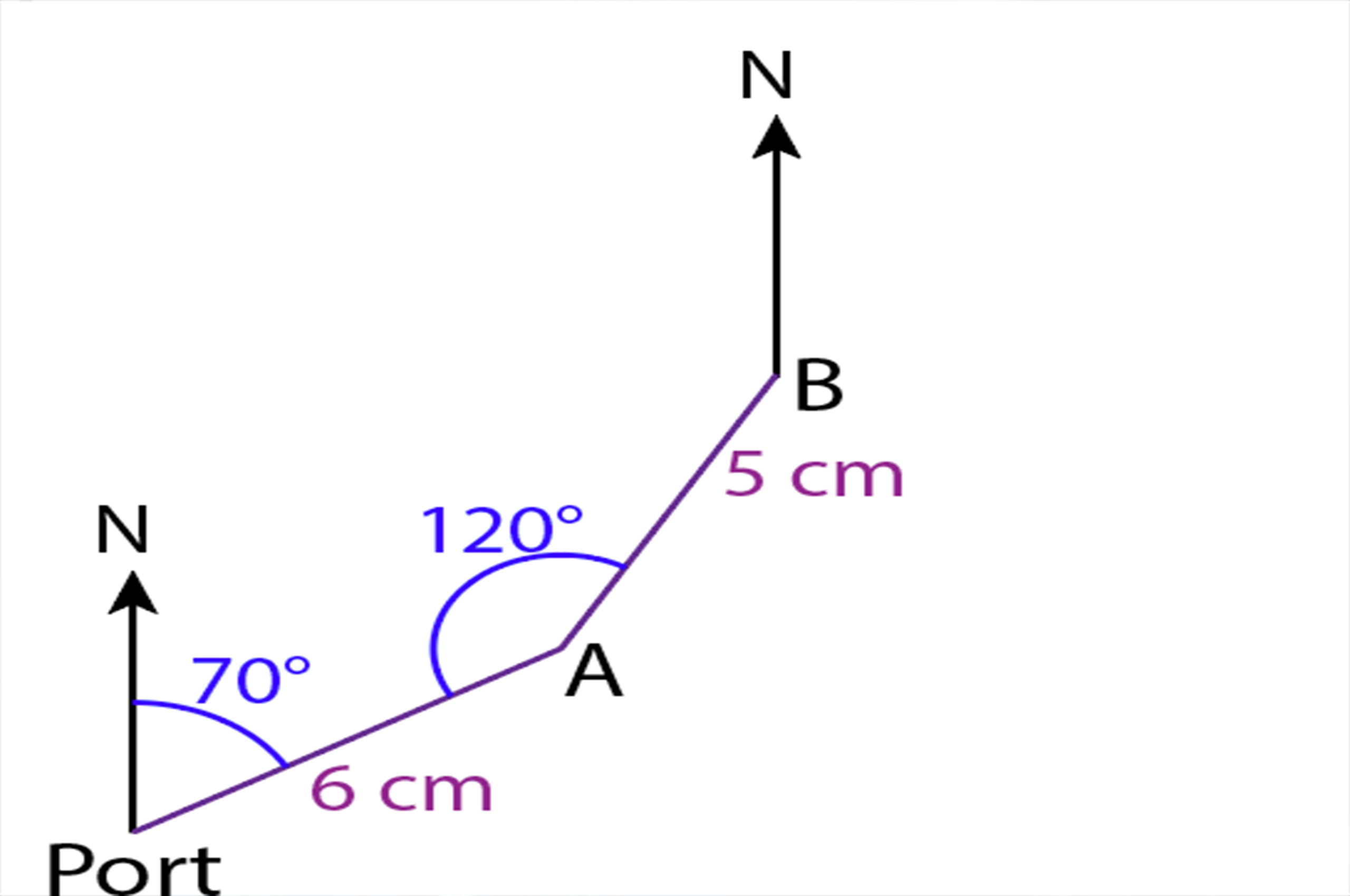
The course also provides detailed instruction in bearings and directions. Learners develop an understanding of compass directions, angles, directional relationships, and three-figure bearings. They learn how to measure, calculate, construct, and interpret bearings accurately using appropriate drawing instruments. Through guided exercises, learners practice determining the direction of one point from another and representing directional information correctly on drawings and diagrams.
Learners are trained in the proper use of common technical drawing instruments, including rulers, protractors, compasses, set squares, pencils, erasers, measuring tools, and other relevant materials. They learn how to use these instruments correctly to construct straight lines, angles, circles, geometric figures, measured distances, and accurate bearing diagrams.
The course further develops learners’ ability to interpret and produce maps, diagrams, plans, and scaled representations. Learners are taught how to read information presented in drawings, identify relevant measurements, calculate distances and angles, determine bearings, and convert the information into accurate graphical representations.
Particular emphasis is placed on practical exercises and problem-solving. Learners work through progressively structured activities that allow them to apply mathematical calculations and drawing techniques to realistic situations. These activities help develop accuracy, spatial awareness, logical thinking, attention to detail, and confidence when working with measurements, directions, distances, and proportional drawings.
The training also introduces learners to the importance of drawing standards, presentation, labelling, dimensioning, accuracy, and clarity. Learners are encouraged to produce drawings that are not only mathematically correct but also neat, organized, properly labelled, and easy to understand.
Where included within the training program, learners may also be introduced to digital drawing and computer-aided techniques, providing an understanding of how traditional principles of measurement, scale, geometry, and bearing can be represented using modern digital tools.
The course is structured to support both theoretical understanding and practical skill development. Lessons may include instructor explanations, demonstrations, worked examples, guided exercises, individual practice, assignments, drawing projects, and practical assessments. This approach enables learners to progressively develop their skills from basic concepts to more advanced bearing and scale drawing problems.
By completing the course, learners gain a solid understanding of how mathematical measurements, directions, distances, angles, and proportions can be accurately translated into visual and technical representations. The training provides a strong foundation for continued learning in subjects and disciplines where accurate measurement, spatial interpretation, technical drawing, and graphical representation are important.
The Bearing and Scale Drawing Course is therefore suitable for learners seeking to strengthen their mathematical, technical drawing, measurement, spatial reasoning, and problem-solving skills through structured and practical learning.
Learners will be able to apply mathematical and graphical principles to interpret information, solve structured problems, and produce accurate and properly presented drawings. The course will also strengthen their spatial reasoning, attention to detail, accuracy, measurement skills, and problem-solving abilities.
By the end of the course, learners will be able to:
Explain the fundamental concepts of bearings, directions, distances, angles, and scale drawing.
Describe the relationship between actual measurements and scaled representations.
Distinguish between different types of scales and understand their appropriate use.
Explain the importance of accuracy and proportionality in technical drawings.
Calculate and use appropriate scale ratios for drawing and measurement.
Convert actual distances into scaled measurements and vice versa.
Produce drawings accurately according to a specified scale.
Enlarge or reduce drawings while maintaining correct proportions.
Determine actual distances and dimensions from scaled drawings, maps, and diagrams.
Identify and use cardinal, intermediate, and other directional references.
Understand and apply three-figure bearings.
Measure and construct bearings accurately using a protractor.
Calculate the bearing of one point from another.
Plot locations using specified bearings and distances.
Interpret directional information presented in diagrams and drawings.
Correctly identify and use common technical drawing instruments.
Use rulers and measuring scales to obtain accurate measurements.
Use protractors to measure and construct angles.
Use compasses to create circles and geometric constructions.
Use set squares and other drawing tools appropriately.
Maintain accuracy and consistency when using drawing instruments.
Draw straight lines, angles, circles, and basic geometric figures accurately.
Construct drawings based on given measurements, bearings, and scales.
Produce neat, proportional, properly labelled, and clearly presented drawings.
Apply appropriate dimensioning and measurement techniques.
Organize drawings in a manner that makes them easy to interpret.
Read and interpret information presented on scaled drawings.
Identify distances, directions, angles, and measurements from maps and diagrams.
Calculate actual distances using the scale provided.
Determine locations and directions using bearing information.
Analyze graphical information and translate it into accurate measurements or drawings.
Apply mathematical calculations to solve bearing and scale-related problems.
Determine unknown distances, angles, bearings, and measurements.
Select appropriate methods for solving different drawing and measurement problems.
Identify errors in calculations and drawings and make appropriate corrections.
Demonstrate logical and systematic approaches to problem-solving.
Produce drawings with a high level of accuracy and attention to detail.
Apply appropriate labelling, dimensions, symbols, and drawing conventions.
Maintain neatness and consistency throughout practical work.
Review completed drawings and correct errors where necessary.
Present technical information clearly and systematically.
Improve the ability to visualize distances, directions, angles, and positions.
Interpret relationships between different points, locations, and measurements.
Apply spatial reasoning when working with maps, diagrams, and drawings.
Develop stronger analytical and mathematical problem-solving abilities.
Apply logical thinking when interpreting and constructing graphical information.
Complete bearing and scale drawing exercises with limited supervision.
Apply acquired skills to unfamiliar drawing and measurement problems.
Select appropriate instruments and techniques for specific tasks.
Demonstrate confidence when interpreting and producing technical drawings.
Complete practical assignments and assessments that demonstrate competence in bearing and scale drawing.
At the end of the course, learners will have acquired a practical and foundational competency in bearing, scale drawing, measurement, geometric construction, technical drawing, and spatial representation. They will be able to accurately interpret and produce scaled drawings, calculate and represent bearings, work with measurements and distances, and communicate technical information through clear and properly presented graphical representations.
The skills developed through the course will also provide learners with a strong foundation for further education, technical training, vocational development, and continued learning in related areas of mathematics, technical drawing, surveying, engineering, construction, architecture, mapping, and other measurement-based disciplines.
No Review found
 Beginner
 Beginner
Discover Additional Learning Opportunities
 Static